
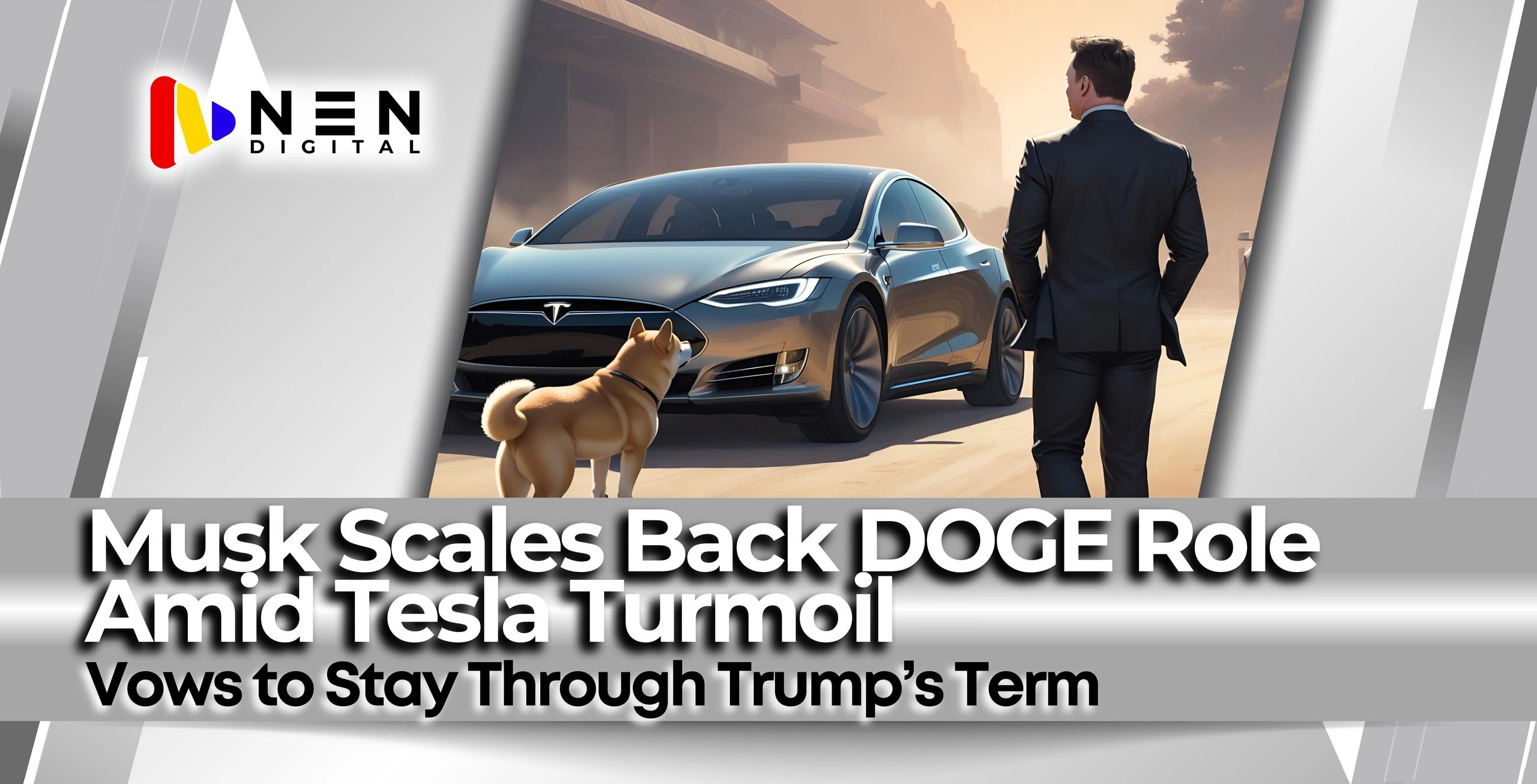
April 24, 2025—In a surprising but strategic move, Elon Musk has confirmed that he will step back from his leadership role in the Department of Government Efficiency (DOGE) to refocus on Tesla. This follows a turbulent start to the year for the electric vehicle giant.
The announcement follows Tesla's Q1 earnings report, which revealed a staggering 71% drop in profits—a reality Musk did not shy away from addressing. During a recent call with investors, the tech billionaire acknowledged the need to prioritize Tesla's operations and innovations in the coming months.
"Tesla needs more of my time and energy right now," Musk said, adding that his involvement in government efficiency efforts will continue, but in a more limited capacity. "I'll still be contributing to DOGE—just not at the same level as before."
What Happens to DOGE Now?
Launched by President Donald Trump in January 2025, DOGE was a fast-moving, reform-focused initiative aimed at rooting out government inefficiency and waste. Musk's role in DOGE was never conventional. While he wasn't a formal government employee, his influence and leadership style shaped many of the department's headline-grabbing initiatives.
With Musk stepping back, the future of DOGE is now under increased scrutiny. He has stated he will continue to contribute one to two days per week to ensure continuity, but the bulk of operational leadership will shift to other appointees.
"I'm not disappearing," Musk emphasized. "DOGE is still very important to me, and I'll support its mission where I can."
A Balancing Act Between Innovation and Government Reform
This isn't the first time Musk has juggled multiple roles, but the current economic and political climate has made the balancing act more complex. Tesla has faced growing competition from global EV manufacturers, rising production costs, and delays in key product launches like the long-promised Robotaxi. Analysts believe Musk's decision to reduce his direct involvement in DOGE signals a strategic pivot back to stabilizing Tesla's core business.
Meanwhile, DOGE continues to generate both praise and criticism. Supporters claim the department has already saved the federal government billions of dollars by canceling redundant contracts and streamlining bureaucratic processes. However, watchdog groups and legal analysts have raised concerns about the transparency and accuracy of these claims.
A report by Investopedia revealed that while DOGE reports $160 billion in savings, some analysts believe the real number could be closer to $100 billion, noting a lack of detailed documentation behind some of the department's bold claims.
Political Implications and Public Reactions
Elon Musk's partial exit from DOGE also has political ramifications. His involvement brought unprecedented visibility to the agency and helped the Trump administration promote its broader vision of a "leaner, smarter government." Now, the administration must navigate how to maintain DOGE's momentum without its most high-profile figure at the helm.
Public reaction has been mixed. Some see Musk's decision as responsible leadership, focusing on where he's most needed. Others worry it could signal a slow decline for DOGE's aggressive reform agenda.
Still, Musk remains optimistic. "Great systems don't rely on one person. DOGE was never about me—it's about making government work better. That mission continues."
What's Next?
All eyes are now on Tesla as it prepares for a crucial second quarter and works to regain investor confidence. At the same time, the Department of Government Efficiency will need to prove that it can function effectively without Musk's constant oversight.
As Tesla and DOGE move forward, Musk's ability to influence from the sidelines will be a test of leadership and legacy—one that could shape not just markets but governance itself.
By Nina Crisostomo | NEN Digital